
Event date: July 19, 2026 · Published: July 28, 2026
The constraint was the jersey
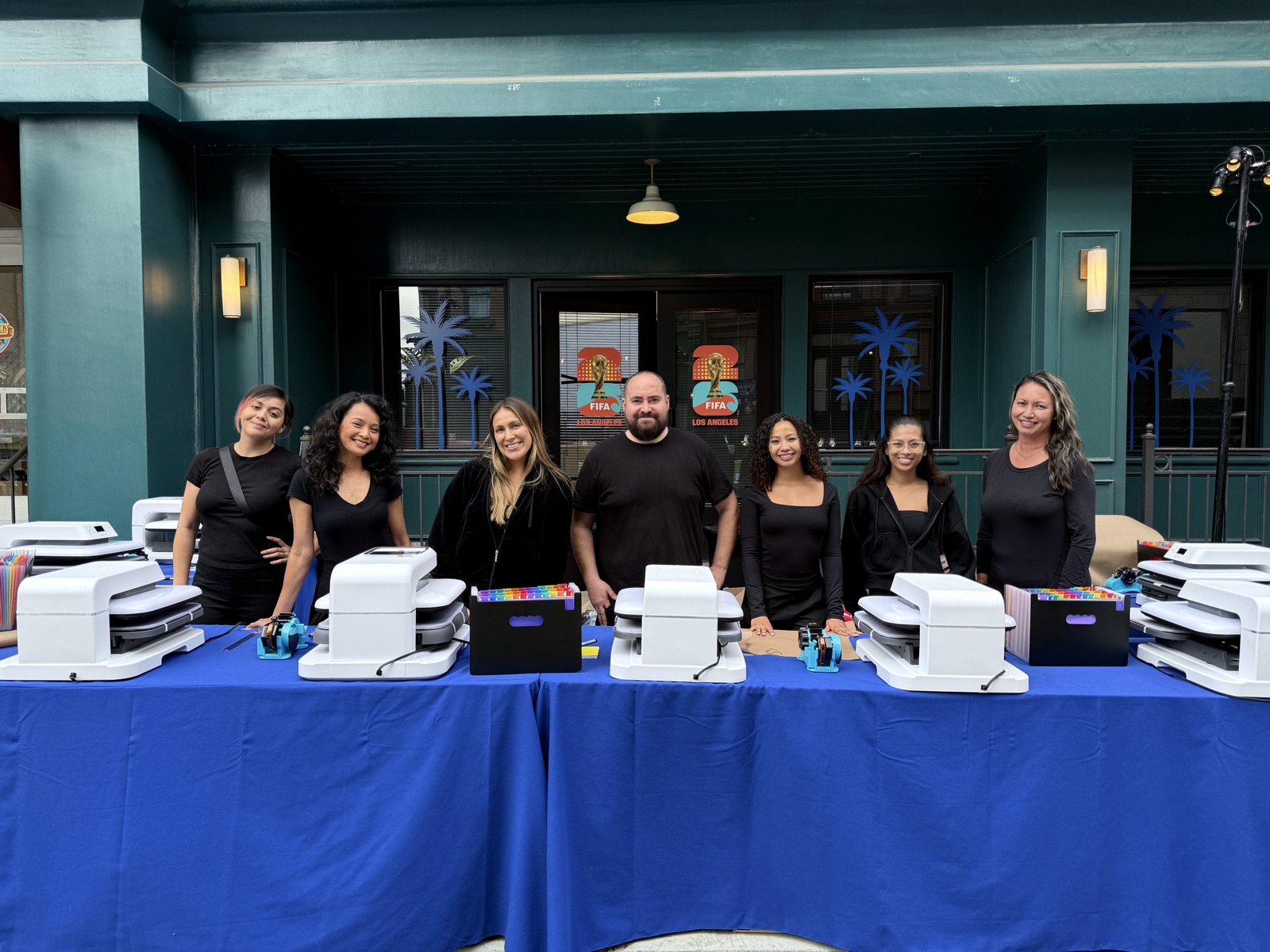
The Fox Performing Arts Center event brought 116 customer-provided jerseys into the production line. Because the material could not exceed 280°F, the crew had to treat temperature as a hard product specification, not a suggestion. Premade DTF name transfers were selected and tested around that limit before the live window.
A five-hour operating window
The three-person team arrived at 10:00 a.m. with three commercial heat presses and planned to load out by 3:00 p.m. With an average cycle of roughly three minutes per jersey, parallel stations provided enough headroom for setup, alignment, pressing, cooling, and quality checks without forcing one operator to rush the fabric.
Why customer-provided apparel changes the plan
When every guest brings or receives a garment that cannot simply be replaced from a local blank inventory, testing matters more. Heat tolerance, seams, numbers already on the jersey, and transfer placement all affect the press recipe. The safest live workflow uses an approved sample, a documented time-and-temperature setting, and a final visual check before handoff.
A practical planning lesson
Throughput is not just press cycle time. It also includes finding the correct transfer, confirming spelling, positioning the name, cooling the application, and returning the right jersey to the right guest. A well-staged three-station setup protects those steps. Compare personalization approaches on our live DTF printing page.
Planning a similar activation?
Send Merch Troop your event date, city, guest count, product, and live window. We will translate the brief into a station count, power plan, staffing plan, and production schedule. Request a live event printing quote.
Recap prepared by the Merch Troop event production team from completed-event production records and original on-site photography.